
Top 6 AI Pitch Deck Creator Alternatives 2026
By Vora IQ Team
Discover 6 AI pitch deck creator alternatives. Compare features to find the best tool for crafting and pitching your business ideas effectively.
- ai pitch deck creator

Building an investor-ready pitch deck quickly without design skills or a full development team wastes time and limits momentum for founders and small startup teams. Most AI pitch deck creators gate full export or advanced branding behind high-priced paid tiers and lock key features until after you commit to a subscription. This comparison highlights pricing, automation, brand fidelity, and language support across six leading business planning software tools so founders and small startup teams can pick the right fit without blind trial costs.
Table of Contents
Vora IQ
At a Glance
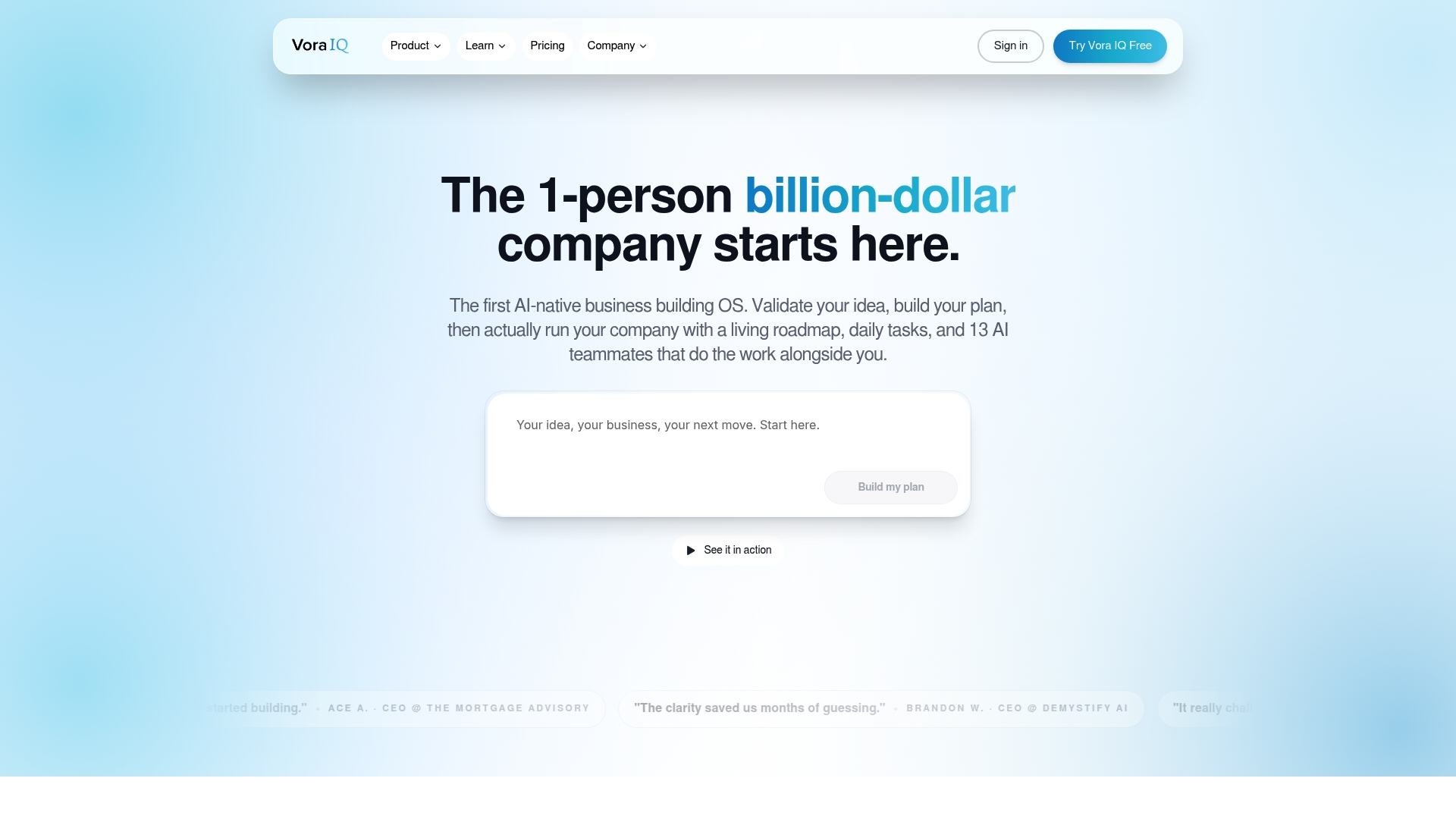
Vora IQ reports delivering over 2,400 unique roadmaps for solo founders and early teams. That claim underlines its focus on turning early ideas into structured plans. The product positions itself as an AI native business operating system that supports validation and execution.
Core Features
Vora IQ combines viability scoring across five dimensions with adaptive, living roadmaps that evolve as your plan changes. It generates prioritized, automated tasks, performs AI driven market research and competitor analysis, and organizes dynamic research and notes tied to your plan. The system also includes automated social media content scheduling, legal compliance alerts, financial dashboards with projections and runway insights, plus custom landing page creation for yearly plans.
Key Differentiator
The core distinction is an integrated AI driven operating system that pairs idea validation with daily execution. Vora IQ bundles a living roadmap, prioritized tasks, and AI specialist teammates into a single shared business context. That combination lets one person manage strategy, finance, legal, marketing, and growth without stitching multiple tools together.
Pros
The product consolidates multiple startup workflows into a single environment so you keep context in one place and avoid manual handoffs. Its AI driven domain expertise adapts to stage and industry, producing focused research, legal prompts, and financial projections tied directly to your roadmap. Automation of prioritized tasks and social content reduces repetitive work, letting you spend time on customer discovery and building traction. The pricing model compares favorably to hiring consultants or buying several point solutions, and that figure of 2,400 roadmaps suggests real usage depth.
Cons
- Limited detail on how the AI quality compares with human experts, which means you should validate important legal or strategic recommendations with a human advisor.
Who It’s For
Solo founders and early stage entrepreneurs who need a single system to validate ideas, create plans, and run daily operations will get the most value. Small teams that cannot afford a full advisory roster will benefit from the AI specialist modules. Larger organizations or those that require dedicated human legal counsel may outgrow the platform.
Unique Value Proposition
The suite of 13 AI specialist teammates is the most concrete capability that changes workflow. These specialists act like a virtual business team covering strategy, marketing, legal, finance, and growth so you get role specific prompts and deliverables without hiring. That approach shortens the time between insight and execution and reduces overhead when you are building early traction.
Real World Use Case
An independent founder with a SaaS idea uses Vora IQ to run a viability score, then generates a tailored roadmap and prioritized tasks for an MVP sprint. She automates social posts tied to launch milestones and watches a financial dashboard for runway signals. The system keeps research, legal checks, and marketing collateral linked to the plan.
Pricing
Vora IQ lists pricing at $49.99/month or $419.99/year. That model gives founders access to the living roadmap, automation, and AI teammates without hiring outside specialists.
Website: https://voraiq.com
ProAI

At a Glance
ProAI states it holds ISO 27001, ISO 27701, and GDPR compliance. The platform guides founders through business plans, pitch decks, and financial forecasts with a step by step workflow. The vendor also claims it can replace parts of traditional consulting while keeping costs affordable.
Core Features
A guided step by step planning workflow walks you from idea to investor pitch while prompting the finance inputs and milestones founders need. An AI Business Advisor offers practical guidance and gives the option to escalate to human support for complex questions. Real time market intelligence, curated investor and lender lists, and exportable investor ready plans and forecasts are available as deliverables.
Key Differentiator
The vendor claims ProAI pairs AI driven guidance with continuous market signals to replace portions of traditional consulting at a lower cost. That combination focuses the product on producing investor grade documents quickly. Market signals feed suggested positioning and update recommendations as trends shift.
Pros
ProAI reports being trusted by over 5,000 entrepreneurs and receives numerous third party reviews that praise time saved and ease of use. The product fits first time founders by breaking finance and market research into digestible steps and templates. AI guidance combined with optional human support gives quick direction and a clear escalation path when you need deeper review.
Cons
- Some reviews indicate competitor analysis and next step recommendations lack depth for more experienced users.
- Relying on AI can miss industry nuance that an experienced human advisor would catch.
- Pricing details are not published publicly, which makes budgeting and direct plan comparison harder before trial.
When It May Not Fit
Experienced founders who need bespoke financial modeling or deep niche market research will find gaps in analysis depth. Teams that want a fully human led strategic advisory relationship should consider a dedicated consultant instead. Startups in highly regulated sectors may require subject matter experts beyond the platform and standard human support.
Who It’s For
Solo founders and first time entrepreneurs preparing investor materials will get the most value. Early stage teams that need rapid market clarity, repeatable templates, and outreach lists will also benefit. If you lack finance experience, the guided workflow helps translate assumptions into presentable forecasts.
Real World Use Case
A founder used ProAI to assemble a business plan and investor deck in hours instead of weeks. Market signals in the platform refined the target customer and competitor story before outreach. That focused work helped the founder secure early stage investment.
Pricing
ProAI does not publish standard pricing on its site. The vendor frames the product as affordable and customer reviews imply subscription tiers with different feature sets. Contact sales for exact tier details and any startup discounts.
Website: https://proai.co
IdeaBuddy
At a Glance
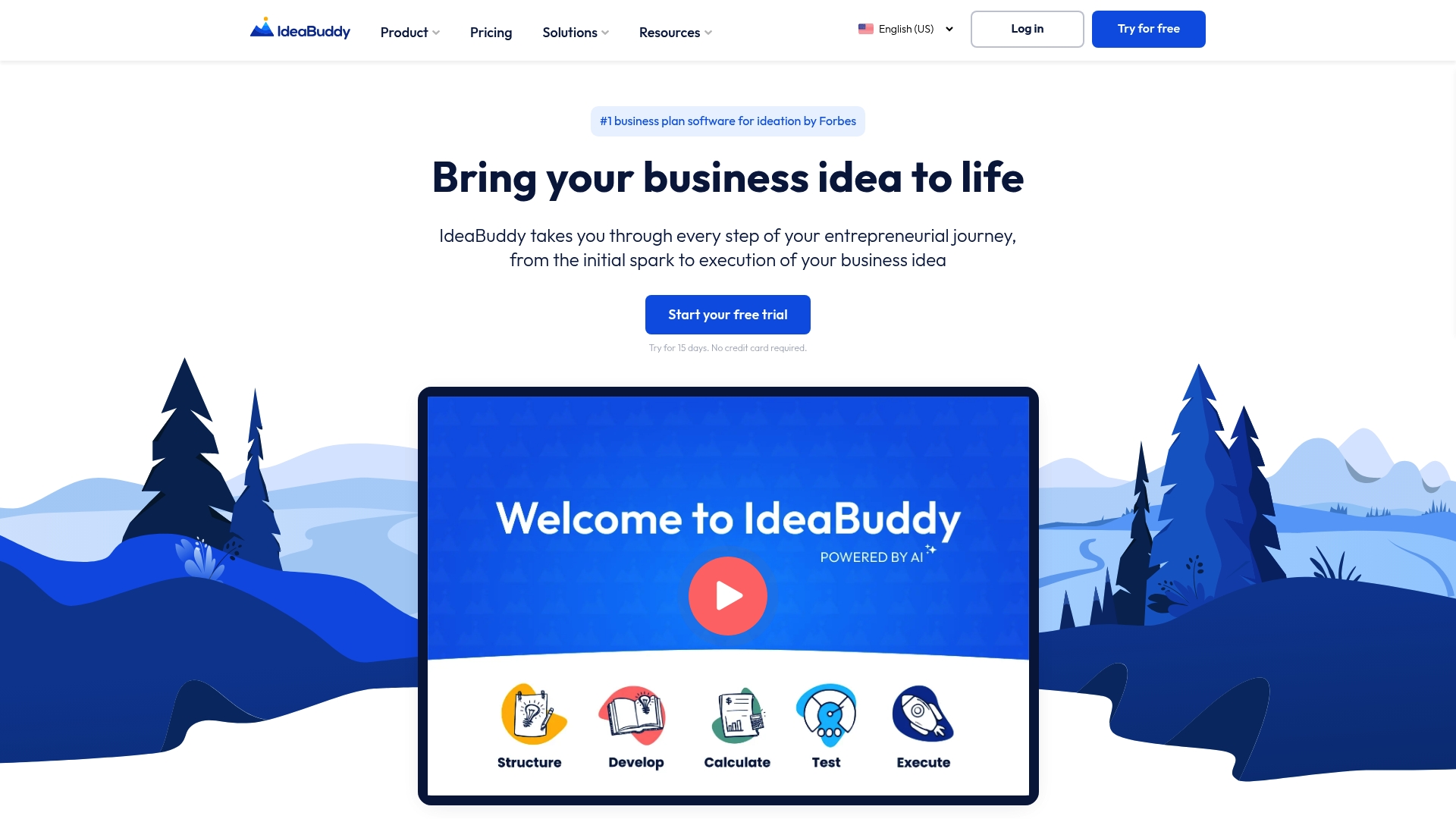
AI-assisted suggestion and writing in nine languages helps you draft plans and pitch text quickly. The vendor says IdeaBuddy has positive coverage on Forbes and G2. The product combines guided planning with built-in validation tests and financial forecasting. That mix shortens the time it takes to turn an idea into a shareable plan.
Core Features
Step-by-step guides walk through industry-specific planning and validation while a single-page business model canvas captures the core model. Built-in financial projections and forecasting tools generate revenue and cost scenarios you can refine. AI-assisted suggestion helps draft sections of plans and pitches, and collaborative features let mentors or cofounders comment on projects.
Key Differentiator
IdeaBuddy focuses on AI suggestions tied to industry templates so you do less repeated work when switching verticals. Templates adapt the planning flow and validation checks to common sector needs, which speeds drafting. That focus makes it easier to produce an investor-ready plan without starting from a blank document.
Pros
The interface feels approachable for first-time founders and familiar enough for experienced planners, which reduces setup friction. The tool groups planning steps, validation tests, and forecasts so you keep context in one place. AI-assisted suggestion speeds writing in multiple languages, and collaborative features let you invite mentors or teammates to review drafts. A free trial lowers the cost of testing the workflow.
Cons
- Some users find the platform deep and dense at first, which raises the learning curve for casual planners.
- Certain templates offer limited customization, making unusual or highly technical models hard to represent.
- The free plan restricts projects and collaborators, so small teams will hit limits quickly.
When It May Not Fit
You will outgrow IdeaBuddy if your business model needs highly custom financial structures or bespoke presentation layouts. Teams that require unlimited collaborators or many active projects will need a paid plan. Large enterprises seeking white-glove customization will find the available templates too constrained.
Who It’s For
Solo entrepreneurs, early-stage founders, small business owners, and consultants who want guided planning and basic forecasting will find IdeaBuddy relevant. Founders who need multilingual drafting and quick pitch drafts will benefit from the AI features. Users seeking lightweight collaboration with mentors will also fit well.
Real World Use Case
A new founder uses IdeaBuddy to map a one-page business model canvas, run financial projections, and validate market assumptions with the built-in tests. They then generate draft pitch text, invite a mentor for feedback, and export slides for investor meetings.
Pricing
According to the company, paid plans start at approximately $5/month. A free plan covers basic use but limits projects and collaborators. Longer-term plans add unlimited projects, more AI requests, export options, and custom enterprise arrangements.
Website: https://ideabuddy.com
Upmetrics
At a Glance
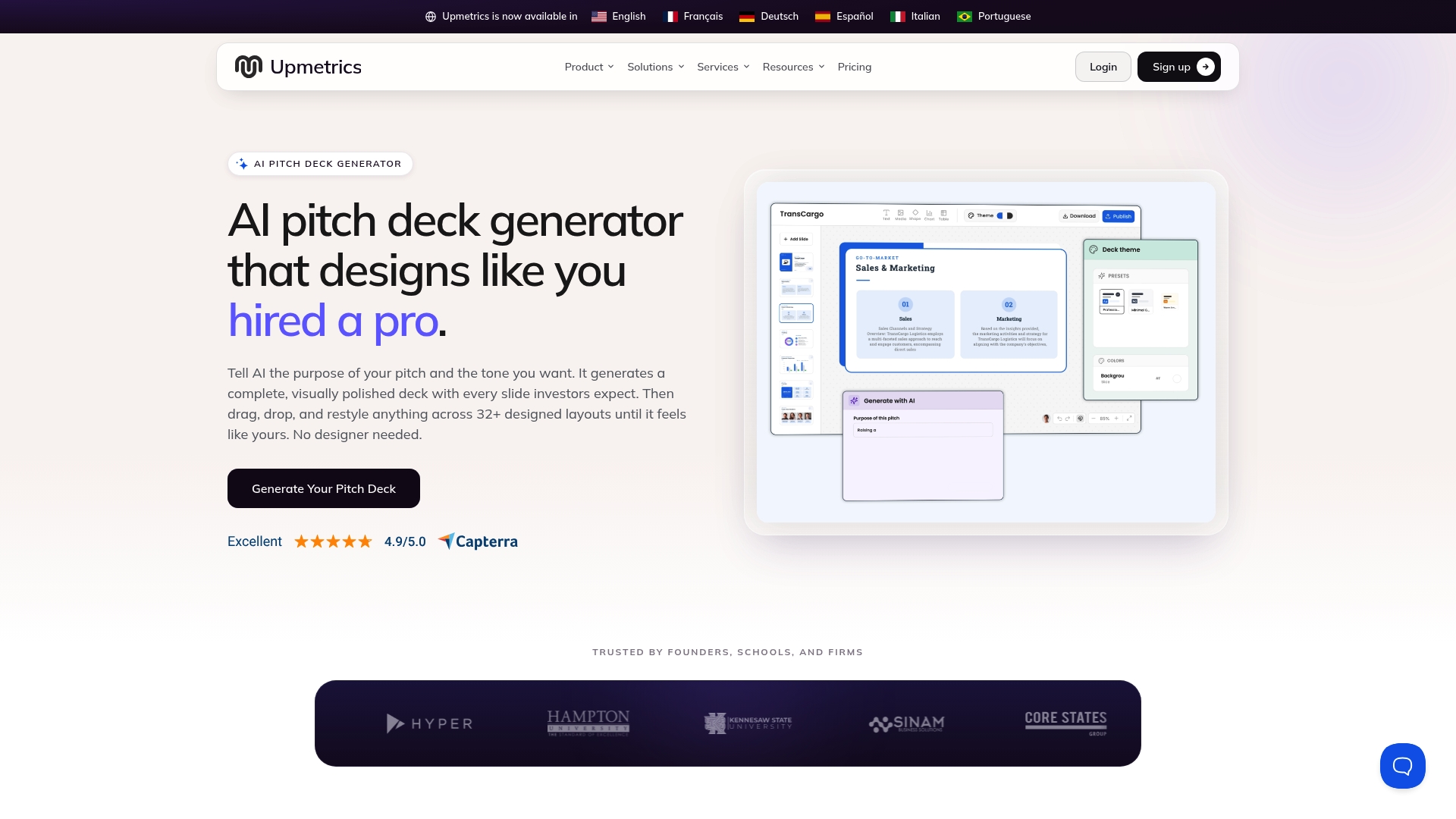
AI automatically drafts complete investor ready slides based on the purpose and tone you choose. The product supports multiple language output including English, French, German, Spanish, Italian, and Portuguese. It also pairs AI drafting with a visual editor and accounting tool integrations to keep financial slides consistent.
Core Features
Upmetrics produces a full pitch deck from a few inputs and then offers per slide AI drafting to refine messaging. The editor uses drag and drop controls and provides 32+ professional layouts so you can swap structures without rebuilding slides. Smart slides render charts and figures from your input numbers, and the tool can output decks in several languages.
Key Differentiator
The single standout feature is the way AI drafting creates whole investor ready slides from your stated purpose and tone. That process reduces the time you spend structuring sections and writing investor facing copy. Founders who want a fast first draft with slide level suggestions will see the clearest benefit.
Pros
Upmetrics generates a complete deck quickly and fills financial and market slides from the numbers you enter, which saves time when you are preparing for meetings. The visual editor offers strong customization and layout swaps so you can align slides to your brand without a designer. Multiple language support and connections to accounting tools help teams keep figures aligned and adapt decks for different investor audiences.
Cons
- Third party reviews report limits when teams demand deep, highly custom slide design that departs from available templates.
- AI generated copy often needs manual polishing to reach investor level tone and precision.
- The free tier is limited, and full functionality requires a paid subscription.
When It May Not Fit
If you need pixel perfect, bespoke slide designs for brand compliance, this tool may feel constrained. Teams that require advanced slide animations or custom visual systems likely need a dedicated design tool. Businesses unwilling to pay for a subscription will find the free feature set restrictive.
Who It’s For
Founders and small startup teams who want a fast, editable investor deck without hiring a designer. Solo entrepreneurs preparing investor meetings under tight timelines will get particular value. Product and growth teams that want draft copy and number driven slides will also find it useful.
Real World Use Case
A SaaS founder selects a pitch deck purpose and tone after signing up. Upmetrics generates a full deck and populates smart slides using the founder’s financial numbers. The founder customizes branding, edits AI drafted copy, and exports a presentation for investor meetings.
Pricing
Pricing uses paid subscriptions with tiered plans. Example tiers include Premium at $14/month and Professional at $37/month, with annual discounts and add ons available. Expect the full feature set to require a paid plan rather than the free tier.
Website: https://upmetrics.co/features/pitch-deck
Slidebean
At a Glance
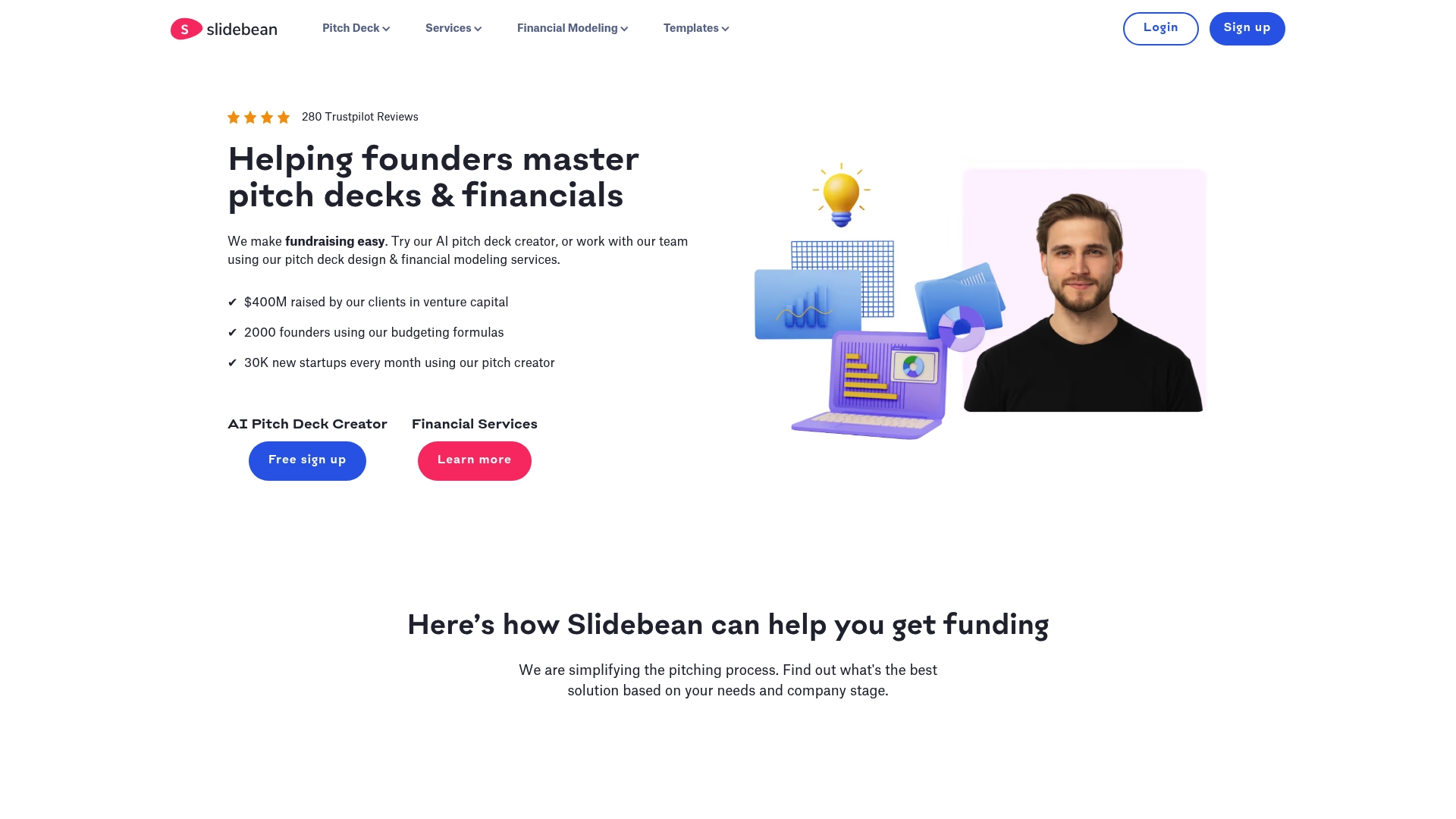
Slidebean reports it has helped raise over $500 million for startups globally. The company pairs an AI-powered pitch deck builder with human consulting and design services. Founded in 2014, Slidebean focuses on helping founders shape investor narratives and financials quickly.
Core Features
Slidebean combines an AI-powered pitch deck builder with automated slide design so your content looks polished without manual layout work. It includes financial modeling and budgeting tools that tie numbers to slides, plus collaboration features for team editing and feedback. Expert consulting services are available for founders who prefer hands-on help refining story and metrics.
Key Differentiator
Slidebean mixes automated creation with staffed consulting, so you can move from a draft deck to a coached pitch. The platform is pitched around delivering investor-ready visuals while a design team or consultants refine narrative and financials. That combination makes it a single stop for both do-it-yourself founders and those who hire help.
Pros
AI assistance accelerates deck production and removes most layout decisions, letting you focus on the story. The platform bundles financial planning tools with slide content so numbers and presentation stay aligned. Users can choose self-service plans or pay for consultant time, giving options for founders with different budgets and skill levels.
Cons
- Pricing may block very small startups or solo founders with tight budgets; many features sit behind paid plans.
- The free tier is limited, so early testing requires a paid subscription to see the full feature set.
- Template customization can feel constrained compared with manual design tools or open-source slide frameworks.
When It May Not Fit
If you need deeply custom slide layouts or full control over every visual element, Slidebean’s automated templates may feel restrictive. Teams that prefer free or open-source tooling will find the paid structure limiting. Very small projects with near-zero budget will likely outgrow the free features quickly.
Who It’s For
Founders preparing for seed or Series A fundraising who want investor-focused slides fast. Small startup teams that need financial models tied to presentation content. Entrepreneurs who value a mix of automation and optional expert help.
Real World Use Case
A founder generates a draft deck with Slidebean’s AI and imports the cap table numbers into its financial model. The team uses built-in collaboration to iterate on slides and share comments. They then book consultant hours to tighten the narrative before investor meetings.
Pricing
Plans are billed monthly or yearly, with tiers starting at $7/month and rising to $99/month for advanced features and consulting. The lower-cost plan gives basic access while higher tiers unlock deeper design features and human support. Billing options and exact feature splits vary by plan.
Website: https://slidebean.com
Ceemo
At a Glance
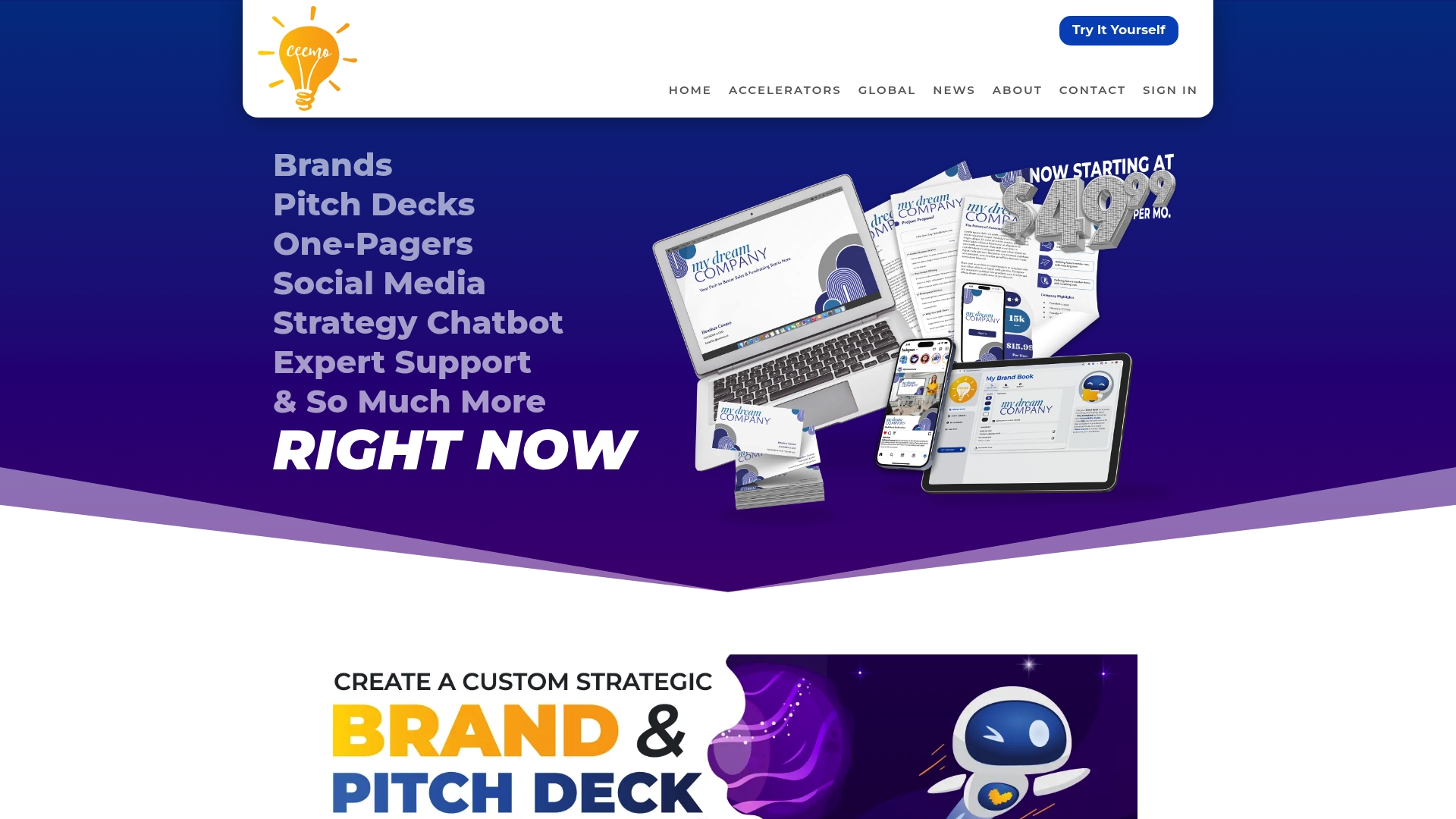
Plans start at $49.99 per month, with a premium $99/month tier and annual plans that advertise over 50% savings. Ceemo automates creation of a full brand identity and applies it across investor decks, social posts, and marketing collateral. The platform targets underrepresented founders with tailored templates and an interactive brand quiz.
Core Features
Ceemo generates a complete brand kit that includes logo options, color palettes, and font pairings, then applies that identity across templates for investor decks, single-page summaries, and social posts. The product includes real-time help through CeemoChat, plus a searchable Asset Library of ready-made marketing materials. It also offers an interactive quiz to customize tone and visual direction and promises future custom design services.
Key Differentiator
Ceemo focuses on end-to-end branding for startups by not only generating an identity but automatically enforcing it across pitch and marketing assets. That automation reduces back-and-forth between designers and founders and keeps investor-facing materials consistent. The company positions this workflow specifically for founders who need investor-ready presentations fast.
Pros
Automates repetitive design work so you can move from idea to investor-ready deck faster. It centralizes identity assets and pushes them into decks, social posts, and proposals to keep messaging consistent. The vendor advertises that Ceemo has helped startups raise venture capital, which supports its focus on investor-ready materials. Subscription plans include a free trial and a premium tier with expanded chatbot access and support.
Cons
- Some promised features such as competitor analysis and expanded AI storytelling are still upcoming and not available now.
- The highest tiers are reported as costly by third-party reviewers, which may strain small budgets.
- AI-generated branding can miss niche industry nuance, so expect manual refinement for specialized products.
When It May Not Fit
If your team needs deep competitor research or narrative modeling today, Ceemo may fall short because those tools are listed as forthcoming. Tight budget teams may find the premium tier expensive for long term use. Enterprises requiring highly customized brand systems will likely prefer a dedicated design partner instead of automated output.
Who It’s For
Early-stage founders who need a cohesive visual identity and pitch materials quickly will get the most value. The product suits solo founders and small teams that lack a full-time designer and want a consistent look across investor and customer touchpoints. It particularly appeals to founders seeking help with investor narratives and social launches.
Real World Use Case
A founder uses the brand quiz to set voice and color, then lets Ceemo generate a logo and apply the palette across a pitch deck and LinkedIn posts. They refine a few slides, then use CeemoChat to tighten the pitch narrative before investor meetings. The workflow replaces multiple vendor handoffs and reduces prep time for fundraising rounds.
Pricing
Plans start at $49.99 per month for the basic tier and move to a premium plan at $99 per month that adds unlimited chatbot access and extra support. The vendor advertises that annual subscriptions yield over 50% savings compared with monthly billing.
Website: https://ceemo.ai
Comparison of alternatives
For entrepreneurs navigating the choice of business planning software, each product offers unique benefits tailored to specific needs. The following analysis highlights key comparative dimensions to aid selection.
Adaptability and scope
Vora IQ provides a and integrated platform that combines features such as viability scoring, dynamic research, and legal and financial tools, enabling founders to consolidate their workflow. Meanwhile, ProAI shines in preparing investor-ready materials efficiently, including guided financial projections and curated market insights ideal for first-time founders. Products like IdeaBuddy and Upmetrics facilitate initial idea exploration and multilingual presentations, respectively, with Upmetrics excelling in fast investor deck creation.
Scalability and customization
Slidebean supports teams with AI-powered customization tailored by optional expert consulting, whereas Ceemo focuses on branding consistency, streamlining the visual narrative across components. Both offer specialized capabilities in their domains, though larger teams may require additional design flexibility than these solutions currently provide. ProAI again is noteworthy for offering escalation paths to human advisors, creating a hybrid model for detailed needs.
Best fit
- Founders seeking a unified operational platform that offers AI-driven assistance across key startup roles will find exceptional value in Vora IQ.
- Entrepreneurs aiming to produce clear, investor-focused presentations within a supportive workflow should consider ProAI.
- Teams planning multilingual or sector-specific pitch presentations with lightweight usability might opt for IdeaBuddy.
- If fast, automated pitch deck creation is required, complete with financial integration, Upmetrics is highly suitable.
- Founders prioritizing brand presentation and identity reinforcement may benefit from Ceemo.
Our pick
Vora IQ excels when a, adaptable platform for planning and executing startup goals is. Its integrated AI systems span various functionalities from validation scoring to daily operational task management, making it an indispensable tool for solo entrepreneurs or small teams. However, for founders who require deep expert-led pitching advice or specialized market segmentation, ProAI provides a valuable alternative with its guided workflows and human insights.
Choosing an AI pitch deck creator often hinges on streamlined multitasking capabilities fused with AI-driven business operations.
| Product | Core Feature | Key Differentiator | Pricing | Notable Limitation |
|---|---|---|---|---|
| Voraiq | Viability scoring and living roadmap | Integrated AI OS | $49.99/month or $419.99/year | Validation by human advisors recommended |
| ProAI | Guided planning and investor workflow | AI guidance with human support | Price not published | Competitor analysis lacks depth |
| IdeaBuddy | Business model canvas and forecasting | Multilingual AI drafting | From $5/month | Limited template customization |
| Upmetrics | Automatic investor slide drafting | AI slide refinement | $14-$37/month | AI-generated copy requires manual polishing |
| Slidebean | AI pitch deck builder with consulting | AI creation with expert advice | $7-$99/month | Restrictive free plan features |
| Ceemo | Comprehensive branding automation | Brand identity enforcement | $49.99-$99/month | Advanced research features not yet available |
What Challenges Face AI Pitch Deck Creator Users?
If you are a solo founder or early-stage entrepreneur, crafting an investor-ready pitch deck often means juggling many moving pieces. Tools that only generate slides can leave you without a clear roadmap or a way to track traction and runway. You need more than visuals. You need a system that combines idea validation, business planning, and daily execution in one place.
Voraiq answers this challenge by offering an AI-native operating system that builds your business plan around a living roadmap. It provides viability scores, automated tasks, and AI-driven market and legal insights focused on your unique goals. With over 2,400 successful roadmaps created, Voraiq helps you move from concept to traction without missing steps.
Explore how Voraiq supports entrepreneurs who want a full toolkit beyond just pitch deck creation. See how pairing strategic clarity with automated execution can bring your startup ideas into sharper focus.
FAQ
How does Voraiq support entrepreneurs in creating pitch decks?
Voraiq provides automated, prioritized tasks that help founders develop their pitch decks efficiently. The platform generates tailored roadmaps and offers AI-driven market research, which assists in crafting investor materials effectively. Expect a streamlined process that reduces the time spent on creating thorough and compelling presentations.
What is the difference between Voraiq and ProAI?
ProAI excels with its step-by-step guided workflow, making it ideal for first-time founders needing structured support. Voraiq, on the other hand, focuses on integrating AI-driven idea validation with execution in a single platform. This makes Voraiq better suited for entrepreneurs looking for a comprehensive solution to manage all aspects of their business planning.
Which platform offers a more automated approach to pitch deck creation?
Voraiq automates various tasks, including social content and legal compliance alerts, which supports a holistic business planning experience. This level of automation allows users to focus on customer discovery and growing their startup, enhancing their ability to create effective pitch decks.
Can I use Voraiq for financial projections in my pitch deck?
Yes, Voraiq includes financial dashboards with projections and runway insights. This feature allows entrepreneurs to incorporate solid financial data into their pitch decks, making their presentations more compelling to investors.
Does the pricing model of Voraiq compare favorably to hiring consultants?
Voraiq’s pricing starts at $49.99/month, making it a cost-effective alternative to hiring multiple consultants for business planning. This lower commitment allows solo founders and early-stage entrepreneurs to utilize advanced features without breaking the bank.